

A restaurant dinner shouldn’t feel like a nutrition exam. Yet choosing between a cheeseburger, grilled salmon, and a creamy pasta dish can become surprisingly stressful when you’re trying to eat better.
Learning how to eat healthy at restaurants without anxiety starts with recognizing that good nutrition doesn’t require perfect decisions. You can enjoy satisfying meals, support your health, and still order something simply because it tastes delicious. The secret is creating a flexible approach that makes eating out enjoyable rather than another source of pressure.
Restaurant anxiety isn’t always about unfamiliar ingredients. Sometimes, it’s the pressure to make the healthiest possible choice while everyone else enjoys their food. Large portions, calorie information, social expectations, and unfamiliar cooking methods can intensify that pressure.
The U.S. Food and Drug Administration reports that Americans consume approximately one-third of their calories away from home. Restaurants are therefore a meaningful part of everyday nutrition, not an occasional exception. However, food anxiety can also develop from rigid dieting rules.
Someone who believes carbohydrates are unhealthy might struggle to enjoy pasta, even when it fits comfortably into their overall eating pattern. The goal isn’t to ignore nutrition. It’s to stop treating every restaurant meal as a test of self-control.
A little preparation can reduce uncertainty without turning dinner into a complicated assignment.
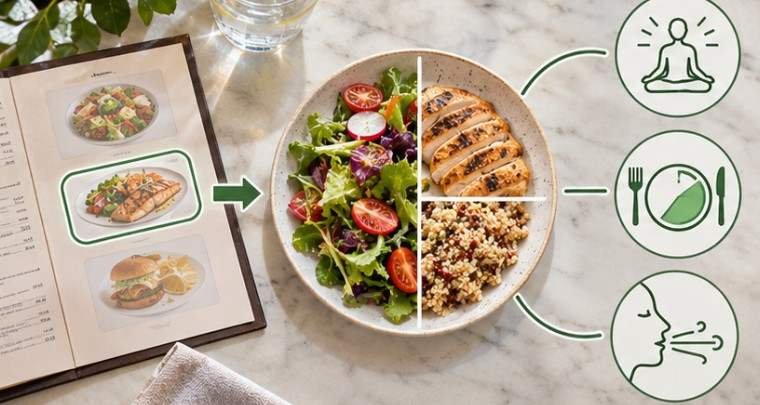
Check the restaurant’s online menu and identify two or three appealing options. Look for meals containing vegetables, satisfying protein sources, and carbohydrates that provide energy.
For example, a Mediterranean restaurant might offer grilled chicken with rice, vegetables, and hummus. Instead of calculating every ingredient, focus on whether the combination sounds satisfying and reasonably balanced.
Skipping lunch to save calories for dinner might seem practical, but it can leave you uncomfortable and distracted. The National Institute of Diabetes and Digestive and Kidney Diseases advises maintaining regular eating times because skipping meals may contribute to overeating later.
If dinner is unusually late, consider a snack such as yogurt, fruit, or whole-grain toast with peanut butter. The purpose isn’t to suppress your appetite. It’s to make the waiting period more comfortable.
Dining with friends sometimes creates unnecessary food comparisons. One person orders a salad, another chooses pizza, and suddenly everyone feels compelled to explain their choices.
You don’t need to order the lightest meal or justify your appetite. If comparisons make you uncomfortable, decide what appeals to you before everyone begins ordering.
Learning how to eat healthy at restaurants without anxiety becomes easier when you have a flexible way to evaluate meals.
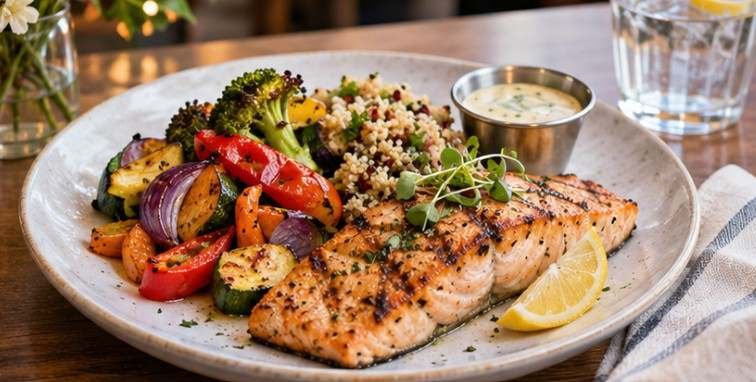
Instead of studying every calorie, ask yourself three questions:
This approach reflects the general principles of USDA MyPlate, which encourages variety across food groups, including fruits, vegetables, grains, and protein. You don’t need every restaurant plate to match a nutritional diagram perfectly.
Menu descriptions provide helpful clues about preparation methods. Grilled, roasted, steamed, baked, and poached dishes often involve different amounts of added fat than deep-fried or heavily battered alternatives.
The American Heart Association recommends reviewing cooking methods, requesting substitutions, and adding colorful produce when possible.
However, a fried dish isn’t automatically a poor choice, and a salad isn’t automatically nutritionally balanced. Ingredients, portions, toppings, and your individual needs all matter.
Restaurant staff regularly accommodate reasonable changes.
You might request dressing separately, add vegetables, or substitute a side dish.
A practical request could sound like this:
“Could I have the grilled chicken with extra vegetables and the sauce on the side?”
Keep modifications manageable. If customizing every ingredient increases your anxiety, ordering the standard dish may be the better choice.
American restaurant servings can be generous, but finishing your plate isn’t mandatory. Neither is stopping halfway simply because a portion looks large. Pay attention to your appetite and comfort. If you’re satisfied before finishing, take leftovers home. If you’re still hungry, eating more is reasonable.
Sharing an appetizer, choosing a smaller serving, or saving food for lunch tomorrow can also be practical options.
For everyday nutrition, consider how to improve nutrition without dieting rather than relying on restrictive restaurant rules. Remember that portion awareness should help you feel comfortable, not make you fearful of eating enough.

Under FDA rules, many US restaurant chains with 20 or more locations must display calories for standard menu items. That information can support people managing specific nutritional needs. However, constantly checking numbers may increase anxiety for others.
If calorie counts trigger guilt or obsessive comparisons, focus instead on meal variety, hunger, satisfaction, and advice from a qualified healthcare professional.
Understanding how to read nutrition labels correctly can be useful without requiring you to track every restaurant ingredient.
Dessert doesn’t cancel out the nutritional value of dinner.
You might order cheesecake, share chocolate cake, or skip dessert because you’re satisfied.
All three decisions can fit within a healthy relationship with food.
The important distinction is choosing based on preference and comfort rather than guilt.
Likewise, you don’t need to compensate for restaurant meals by skipping breakfast or exercising excessively the following day.
For your next meal out, experiment with this low-pressure process:
For busy weeks, planning balanced meals ahead can provide consistency while leaving room for spontaneous dinners.
The routine should reduce decision fatigue, not become another rigid checklist.
Yes. Regular restaurant meals can fit into a nutritious eating pattern. Consider overall variety, portion comfort, food preparation, and your personal dietary needs rather than judging individual meals.
Avoid labeling meals as failures. Return to your usual eating routine, skip compensatory restrictions, and remember that one dining experience doesn’t define your overall health.
Grain bowls, tacos with beans, grilled fish, vegetable stir-fries, sandwiches, and pasta with vegetables can all provide satisfying combinations of nutrients.
Not necessarily. Calorie tracking can help some people, but it isn’t required for healthy eating. If tracking creates distress, discuss alternative approaches with a qualified dietitian.
Healthy eating should make everyday life easier, not turn enjoyable experiences into stressful calculations. The next time you visit a restaurant, focus on choosing food you like, including nourishing ingredients when practical, and paying attention to your body’s needs.
Some meals will be carefully balanced. Others will involve pizza, dessert, or a celebration with friends. Both can have a place in a healthy lifestyle.
I believe the most valuable restaurant habit isn’t choosing the lowest-calorie option. It’s developing enough confidence to enjoy your meal without guilt, unnecessary rules, or the feeling that you must earn your food.