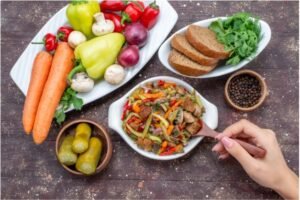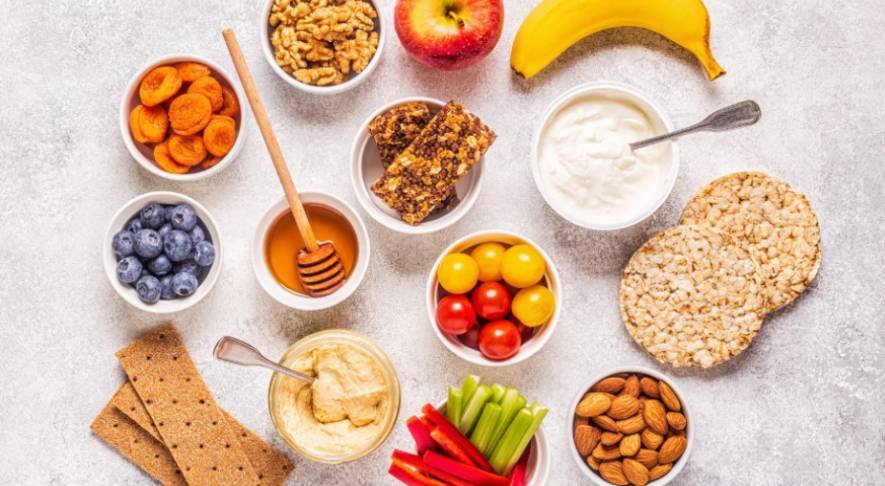

fA calmer stomach can make meals, workdays, and even sleep feel easier. The keyword what to eat for gut health may sound like a nutrition puzzle, but the answer is friendly food, steady fiber, colorful plants, fermented favorites, and small daily choices your digestive system can trust.
Understanding what to eat for gut health is necessary because your gut is like a tiny food festival inside you. Good bacteria show up hungry, and they want fiber, plants, and fermented foods, not just random snacks. Feed them well, and digestion often feels smoother. Ignore them, and your stomach may throw a noisy little protest.
Your gut microbiome is the community of bacteria and other tiny organisms living in your digestive tract. These microbes help break down food, support regular bowel movements, and play a role in immune health.
A healthy eating pattern gives this microbiome the right support. The best plan is not extreme. It is a mix of probiotic foods, prebiotic fiber, plant variety, water, and balanced meals.
Probiotics are live beneficial bacteria found in some fermented foods. They can help add helpful microbes to your gut when eaten regularly as part of balanced meals.
Prebiotics are types of fiber that feed the good bacteria already living in your gut. Digestion usually works better when both show up together.
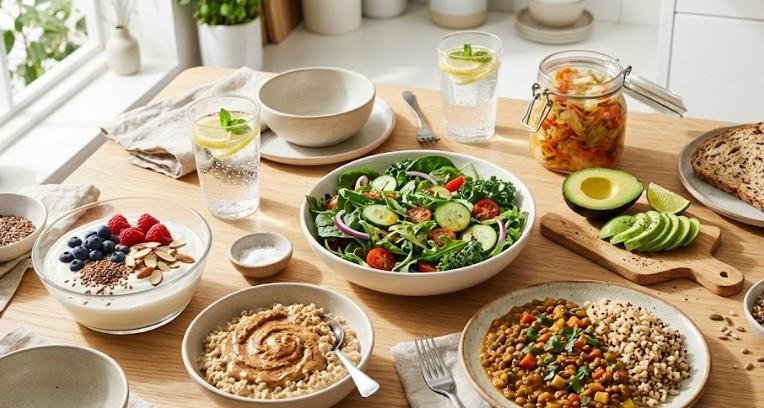
Your gut likes variety because different plant foods offer different fibers and plant compounds. Oats, beans, berries, greens, seeds, nuts, herbs, and whole grains all bring something useful.
You do not need a fancy diet. A simple goal is to add more colors and textures to meals during the week.
The best gut foods are common, affordable, and easy to use in everyday meals.
Fermented foods can introduce live, beneficial bacteria directly into your microbiome. Easy options include plain Greek yogurt, kefir, kimchi, sauerkraut, miso, and tempeh.
Johns Hopkins Medicine often highlights digestion-friendly foods like Greek yogurt, kefir, kimchi, and sauerkraut. Choose lower-sugar yogurt and kefir, and watch sodium in packaged options.
High-fiber foods act like fuel for good gut bacteria. Beans, lentils, chickpeas, oats, apples, bananas, vegetables, and whole grains help support digestive balance.
Start with small servings if your current diet is low in fiber. Half a cup of beans or a bowl of oats is a smart beginning.

Viscous fiber forms a gel-like texture during digestion. Whole oats, berries, chia seeds, apples, and barley are beginner-friendly foods that fit this category.
These foods may help produce short-chain fatty acids, which support the gut lining. They also make meals feel more filling.
Resistant starch resists digestion in the small intestine and reaches the colon, where gut bacteria can use it as fuel.
Good choices include beans, lentils, chickpeas, cooled potatoes, cooled rice, and green, unripe bananas. Add them gently if you get bloated easily.
Gut health also depends on colorful plant compounds, healthy fats, and steady meal habits.
Polyphenols are plant compounds found in colorful fruits, vegetables, green tea, cocoa, herbs, and dark chocolate. They act like antioxidants and may support healthy bacteria.
Berries, leafy greens, apples, red cabbage, extra-virgin olive oil, and unsweetened green tea are simple ways to add them.
Flaxseeds and chia seeds add fiber, omega-3 fats, and bulk that can help support regular digestion. Walnuts, almonds, and pistachios also bring fiber and healthy fats.
Try one tablespoon of chia or ground flax in oatmeal, yogurt, or smoothies. Small portions are powerful and easier on the stomach.
Leafy greens like spinach, kale, collards, and romaine add fiber, magnesium, and plant compounds. Legumes like beans and lentils bring prebiotic fiber and steady energy.
A simple lentil soup with spinach is a strong gut-friendly meal. It is warm, filling, affordable, and easy to batch cook.
Learning what to eat for gut health works best when you turn it into repeatable steps, not strict rules.

Start with breakfast. Choose oats with berries, yogurt, and chia seeds, or whole-grain toast with avocado and eggs. This gives your gut fiber, protein, and helpful nutrients early.
At lunch, add one plant-based fiber source. A bowl with brown rice, black beans, spinach, salsa, avocado, and plain yogurt is simple and satisfying.
At dinner, pair salmon, chicken, tofu, or beans with roasted vegetables and a whole grain. Add a small serving of fermented food if you enjoy it.
Gut health is not about being perfect, but some foods can crowd out better choices. Highly processed snacks, sugary cereals, sweet drinks, fast food, and processed meats are often low in fiber. Having them often may make it harder to build a diverse gut routine.
Alcohol, heavy fried foods, and too much added sugar may also bother digestion for some people. Notice how your body responds, then adjust without guilt.
For breakfast, try oatmeal with berries and yogurt. For lunch, eat lentil soup. And For dinner, choose bean chili with roasted vegetables.
Expert resources can help you go deeper without getting lost in diet trends and plan a balanced meal. Johns Hopkins Medicine is useful for digestion-friendly food guidance. Hartford HealthCare shares practical lists of gut-supportive foods. The Canadian Digestive Health Foundation offers clear tips on fiber, probiotics, and daily gut habits.
Use expert resources for education, but personalize slowly. If you have ongoing pain, major bowel changes, food intolerance, or a medical condition, speak with a qualified healthcare professional.
A strong choice is plain Greek yogurt with oats, berries, and chia seeds. It combines probiotics, prebiotic fiber, plant compounds, and protein in one easy beginner-friendly meal.
A 7 day gut reset means eating more plants, fiber, fermented foods, and water for one week while reducing added sugar, alcohol, and ultra-processed foods.
Water should be your main drink because it helps fiber move through your system. Kefir, low-sugar kombucha, ginger tea, peppermint tea, and whole-fruit smoothies can also help.
Your gut does not need a harsh cleanse. Eat oats, beans, lentils, berries, leafy greens, yogurt, kefir, chia seeds, and drink enough water daily.
The best answer to what to eat for gut health is not a strict diet or a magic drink. It is a steady mix of fermented foods, prebiotic fiber, colorful plants, seeds, nuts, legumes, leafy greens, and water. Start with one meal, build slowly, and let your gut enjoy the friendly upgrade.