Blog

  • The No-Stress Blueprint to Healthy Eating on a Tight Budget

    The No-Stress Blueprint to Healthy Eating on a Tight Budget

    The grocery checkout screen can feel a little too dramatic when every item seems to push your total higher. When you are walking through store aisles with a tight budget, healthy choices can start to feel expensive, stressful, or completely unrealistic.

    But healthy eating on a tight budget is not about giving up the foods you enjoy or surviving on the same boring meals every week. It is about learning how to shop smarter, stretch ingredients further, reduce waste, and make simple meals that support your health without draining your wallet.

    Key Takeaways

    • Whole foods like oats, eggs, and brown rice cost less per serving than processed options.
    • Frozen fruits and vegetables offer the same vitamins as fresh options for a lower price.
    • Meal planning cuts down your grocery bill by stopping accidental impulse purchases.
    • Plant proteins like beans and lentils drop your cooking costs while boosting dietary fiber.
    • Checking the shelf unit price ensures you buy the cheapest brand every single time.

    The Secret Recipe for Financial Kitchen Freedom

    Let us face the truth: your wallet does not need to suffer just because you want a flat stomach and clear skin. Society tricks us into believing that wellness requires expensive superfood powders and designer grocery bags. 

    Learning the art of healthy eating on a tight budget is your ultimate financial superpower. It keeps your bank account completely happy while giving your cells the exact daily fuel they need to thrive.

    Top Strategies for Budget-Friendly Healthy Eating

    Mastering your grocery list starts long before your feet hit the supermarket floor.

    Top Strategies for Budget-Friendly Healthy Eating

    Swap Animal Protein

    Incorporating more black beans, red lentils, and whole eggs into your weekly menu rotation provides high-quality protein and essential fiber for a tiny fraction of the cost of beef or chicken. 

    These plant-based options expand during the cooking process, making your meals stretch much further. Your digestion will thank you for the extra fiber boost while your wallet enjoys the massive relief at checkout.

    Embrace Frozen Produce

    Embrace Frozen Produce

    Stocking your freezer with bags of broccoli, spinach, and wild berries prevents expensive food waste because you only thaw what you actually need. 

    Frozen vegetables are pre-chopped and packed at peak ripeness, meaning they lock in all their vital nutrients safely. You completely bypass the risk of fresh greens turning into brown sludge in the back of your refrigerator.

    Utilize Bulk Staples

    Purchasing whole grains like brown rice, rolled oats, and quinoa in large bulk bags saves an incredible amount of money per serving. 

    These dense complex carbohydrates act as a wonderful nutritional base for almost any meal you create. They store beautifully for months in your pantry, keeping your daily food costs incredibly predictable and low.

    Plan and Shop Local

    Writing down a definitive meal plan before leaving the house stops you from making costly impulse purchases down the snack aisle. 

    Sticking to a strict shopping list keeps your mind focused and your checkout total entirely manageable. Visiting local farmers markets near the end of the day often rewards you with amazing prices on seasonal produce.

    Budget-Savvy Meal Ideas

    Transforming simple raw ingredients into delicious daily fuel comes down to consistency and workflow.

    Budget-Savvy Meal Ideas

    Base Dishes on Rice and Beans

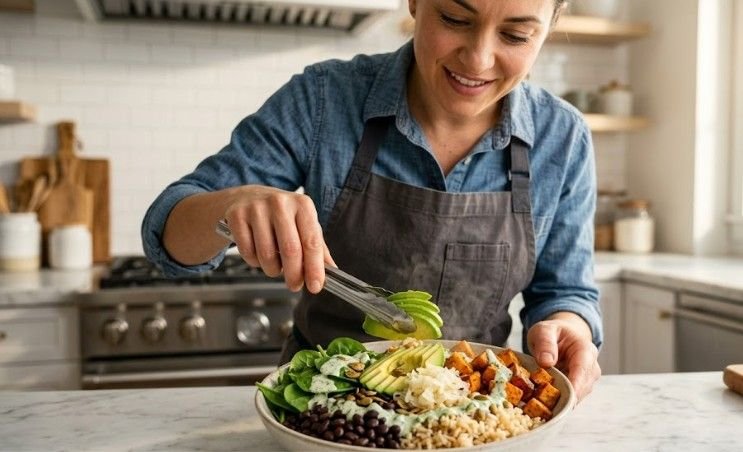
    Combining black beans and brown rice creates a complete protein that satisfies your hunger for hours. Toss in whatever seasonal vegetables you have on hand and drizzle with a quick homemade dressing to elevate the flavor profile. This incredibly cheap foundation can be seasoned with cumin and lime juice for a classic, comforting dinner.

    Quick Stir-Fries

    Tossing frozen mixed vegetables into a hot skillet with bulk brown rice or whole-wheat pasta creates a fast, nutritious lunch. 

    Mix a simple homemade sauce using low-sodium soy sauce, garlic powder, and a touch of honey to avoid expensive store-bought marinades. This meal takes under fifteen minutes to prepare, beating the speed and cost of any local fast-food drive-through.

    Hearty Oatmeal Bowls

    Starting your morning with a warm bowl of inexpensive rolled oats provides long-lasting fuel that keeps your brain sharp. Top your morning oats with a handful of thawed frozen berries and a spoonful of peanut butter for healthy fats in your diet.This comforting breakfast costs mere pennies per serving and completely eliminates the need for sugary boxed cereals.

    Frequently Asked Questions

    1. Can you eat healthy on a tight budget?

    Yes, focusing your grocery trips on whole foods like dried beans, oats, eggs, and frozen vegetables allows you to eat highly nutritious meals for a fraction of the cost of processed convenience items. It simply requires a little bit of advance planning and smart ingredient shopping.

    2. What is the healthiest food to eat on a budget?

    Eggs and dried lentils are incredibly healthy and cheap. They deliver high-quality protein, essential vitamins, and minerals while costing only a few cents per individual serving at any standard grocery store, making them perfect for low-cost meal preparation.

    3. What is the 3 3 3 rule for eating?

    This structure involves eating three balanced meals, enjoying three nutritious snacks, and spacing them three hours apart. It keeps your blood sugar stable, prevents expensive, impulsive binge eating throughout the day, and helps you use up your pre-planned groceries efficiently.

    4. Can you live on $200 a month for food?

    Yes, a single person can live comfortably on fifty dollars a week by planning meals carefully, cooking at home, choosing generic store brands, and avoiding expensive dining out or fast food trips. Focus your shopping list entirely on bulk whole grains and frozen produce.

    Cash in on Clean Eating

    Eating well does not have to depend on a bigger paycheck or a cart full of expensive “health” products. Real progress often starts with small, repeatable choices: choosing whole grains, buying frozen fruits and vegetables, cooking simple meals, planning before you shop, and using every ingredient wisely.

    When you stop seeing budget meals as a limitation, you begin to notice how flexible, filling, and nourishing they can be. Healthy eating on a tight budget is really about confidence in the kitchen, not perfection. Start with one smart habit this week, then build from there. Over time, those small changes can support your energy, your health, and your wallet without making food feel stressful

  • Pass the Flavor, Hold the Salt With Low-Sodium Diet Food

    Pass the Flavor, Hold the Salt With Low-Sodium Diet Food

    Learning how a low-sodium lifestyle protects your body can turn a stressful medical chore into an exciting, flavorful kitchen game. Think of your blood vessels as smooth highways. When too much salt enters your system, it acts like a giant traffic jam. One that forces your heart to work overtime just to pump blood through your body. 

    Cutting back on the salt shaker clears up the traffic instantly, giving you boundless natural energy while protecting your long-term cardiovascular wellness.

    Key Takeaways

    • Check food labels for five percent Daily Value or less to identify low-salt options easily.
    • Splash fresh citrus juices and vinegars onto meals to replace the bite of traditional salt.
    • Rinse your canned beans and vegetables under tap water to wash away forty percent of sodium.
    • Feast on unprocessed, single-ingredient whole foods like fresh vegetables, fruits, eggs, and plain grains.
    • Swap out packaged grocery store items for easy homemade spice blends to protect your heart.

    Mastering What To Eat Every Day

    Building a beautiful meal around whole foods is the absolute foundation of long-term health success.

    Choosing ingredients that come straight from nature ensures that you are nourishing your body without overloading your system with chemical preservatives. When you focus your grocery cart on single-ingredient items, you completely eliminate the stress of tracking complicated mathematical equations at the dinner table.

    Bountiful Fresh Produce and Greens

    Bountiful Fresh Produce and Greens

    All fresh fruits like bananas, crisp apples, and sweet oranges contain virtually zero natural sodium while delivering essential vitamins to your body. Filling your plate with vibrant fresh vegetables such as spinach, sweet bell peppers, and roasted sweet potatoes naturally floods your bloodstream with heart-healthy potassium.

    Clean and Unprocessed Clean Proteins

    Selecting fresh or frozen chicken, lean turkey, beef, and wild seafood without added marinades or chemical broths keeps your baseline sodium incredibly low. Checking the fine print on raw meat packaging ensures that corporate manufacturers have not injected a hidden saline solution directly into the muscles.

    Nourishing Plant Proteins and Wholesome Grains

    Unsalted nuts, raw seeds, dried lentils, and split peas add more fibre. It provides excellent muscle-building power without any added factory salt. Pairing these with wholesome grains like brown rice, ancient quinoa, pearled barley, and rolled oats creates a comforting meal that keeps your heart wonderfully happy.

    Spotting Hidden Salt Traps To Avoid

    Learning where manufacturers hide sodium will completely transform your daily energy and health.

    Highly processed convenience items and pre-packaged foods are the primary secret sources of excess salt in the modern western diet. Many grocery store products that do not even taste salty are actually loaded with sodium-based preservatives designed to extend shelf life.

    Spotting Hidden Salt Traps To Avoid

    Savory Processed Meats and Fast Fixes

    Bacon, breakfast sausage, hot dogs, deli cold cuts, and cured fish are packed with massive amounts of sodium to prevent spoilage. These processed meats cause immediate water retention and risk your heart with diseases, making them a top item to leave off your weekly shopping list.

    Heavy Convenience Meals and Salty Condiments

    Frozen television dinners, jarred store pasta sauces, and traditional canned soups are notoriously packed with sodium to make up for a lack of fresh ingredients. Jarred pickles, green olives, commercial soy sauce, and processed potato chips similarly pack an entire day worth of salt into a single tiny serving.

    Commercially Prepared Breads and Bakery Items

    Many beginners are completely shocked to learn that everyday grocery store bagels, flour tortillas, and instant baking mixes contain dense amounts of hidden sodium. Manufacturers use salt as a dough conditioner, meaning a single sandwich can easily exhaust your entire low-sodium budget before lunchtime arrives.

    Smart Shopping Tips For Low Sodium Diet Food Success

    Taking control of your home kitchen allows you to become the master of your own physical wellness include anti inflammatory diet foods.

    Transforming your daily routine into an effortless habit simply requires a few clever lifestyle adjustments when navigating the grocery store aisles. Implementing these quick culinary practices ensures you never have to sacrifice the delicious joy of a comforting, savory meal. (more…)

  • How To Read Nutrition Labels Correctly: Smart Food Picks

    How To Read Nutrition Labels Correctly: Smart Food Picks

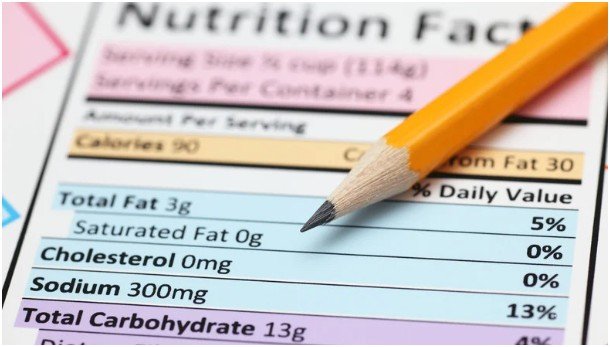
    I learned how to read nutrition labels correctly after realizing my “single snack” was actually three servings. That tiny detail changed the calories, sodium, sugar, and fat completely. A Nutrition Facts label is not just a box of numbers. It is a shortcut for deciding whether a packaged food fits your day.

    The FDA says all nutrient amounts on a Nutrition Facts label are based on the listed serving size, not the whole package unless the package contains one serving. That is why the first smart move is simple: read from the top down.

    Start With Serving Size Before Calories

    Serving size tells you the amount used to calculate every number on the label. It may be cups, grams, pieces, slices, or fluid ounces. It is not always the amount you personally eat.

    Check Servings Per Container

    Servings per container shows how many servings are inside the full package. This is where many people get tricked. If a bag of chips lists 150 calories per serving but has three servings, eating the whole bag means 450 calories.

    I use this quick label test before buying: “Will I eat one serving or the full package?” That one question makes the label honest.

    Use Calories as a Portion Reality Check

    Calories show the energy you get from one serving. They are useful, but they should not be the only thing you judge. A 250-calorie snack with fiber and protein may keep you full longer than a 120-calorie snack loaded with added sugar.

    If you want how to read nutrition labels correctly in real life, compare calories with serving size. A small serving with high calories may still fit your day, but you should know what you are choosing.

    Understand % Daily Value Without Doing Math

    Understand % Daily Value Without Doing Math

    The % Daily Value, or %DV, shows how much one serving contributes to a 2,000-calorie daily diet. The FDA’s simple rule is easy to remember: 5% DV or less is low, and 20% DV or more is high.

    Use the 5/20 Rule Fast

    I use 5% and 20% as a quick grocery-store filter. For nutrients to limit, low is better. For nutrients to get more of, high is better.

    Choose lower %DV for saturated fat, sodium, and added sugars. Choose higher %DV for fiber, vitamin D, calcium, iron, and potassium. The FDA recommends this same general pattern.

    Nutrients to Limit on a Food Label

    Nutrients to Limit on a Food Label

    A product can look healthy on the front and still carry high amounts of sodium, added sugar, or saturated fat. The back label gives the real story.

    Saturated Fat and Trans Fat

    Saturated fat should stay low, especially if you eat packaged foods often. Trans fat should be avoided as much as possible. Even when a label says 0 grams, check the ingredient list for partially hydrogenated oils.

    Sodium

    Sodium deserves attention because packaged and prepared foods can raise your intake quickly. The CDC says Americans consume more than 3,300 mg of sodium per day on average, above the federal recommendation of less than 2,300 mg for teens and adults.

    When comparing soups, sauces, frozen meals, or deli items, I pick the lower-sodium option when taste and price are close.

    Added Sugars

    Added sugars are different from natural sugars found in foods like fruit or milk. They add sweetness without much nutrition. The Dietary Guidelines for Americans recommend limiting foods and drinks higher in added sugars, saturated fat, and sodium.

    Nutrients to Look For More Often

    Reading labels should not only be about restriction. I get better results when I look for what a food gives me.

    Fiber, Protein, and Key Minerals

    Fiber supports digestion and fullness. Protein helps with muscle maintenance and steadier hunger. Calcium, iron, potassium, and vitamin D are also worth checking because many people do not get enough through daily meals.

    If you are working on fiber, connect this habit with eating more fiber without changing your diet, so your food swaps feel easier.

    Read the Ingredient List Like a Detective

    Read the Ingredient List Like a Detective

    Ingredients appear in descending order by weight. The first few ingredients usually make up most of the food.

    When sugar appears near the top, I pause. It may appear as cane sugar, dextrose, maltose, corn syrup, high fructose corn syrup, or fruit juice concentrate. A long ingredient list is not always bad, but it should make sense.

    This is one of the easiest ways to understand how to read nutrition labels correctly without needing nutrition training.

    My Quick Label Example

    Imagine a granola pouch lists one serving as 1/3 cup. The label shows 180 calories, 8 grams added sugar, and 120 mg sodium. The pouch has three servings.

    If I eat the full pouch, I get 540 calories, 24 grams added sugar, and 360 mg sodium. The label did not lie. I just had to multiply.

    That is my favorite practical trick: serving size first, then multiply by the amount I will actually eat.

    FAQ

    1. What is the first thing to check on a nutrition label?

    Check the serving size first because every calorie and nutrient number depends on it.

    2. What does 20% Daily Value mean?

    It means one serving is high in that nutrient, based on a 2,000-calorie daily diet.

    3. How do I spot hidden sugar on labels?

    Look for sugar names like dextrose, maltose, corn syrup, cane sugar, and fruit juice concentrate.

    4. Why learn how to read nutrition labels correctly?

    It helps you compare foods, control portions, limit excess sugar or sodium, and choose better options.

    Final Bite: Make the Label Work for You

    A food label should not make eating feel complicated. It should help you make faster, smarter choices. Start with serving size, use the 5/20 rule, limit sodium and added sugar, and look for fiber and protein.

    My rule is simple: never trust the front of the package until the back label has spoken.

  • What To Eat For Gut Health Foods That Work Well For Ya

    What To Eat For Gut Health Foods That Work Well For Ya

    fA calmer stomach can make meals, workdays, and even sleep feel easier. The keyword what to eat for gut health may sound like a nutrition puzzle, but the answer is friendly food, steady fiber, colorful plants, fermented favorites, and small daily choices your digestive system can trust.

    Why Your Gut Cares About Dinner

    Understanding what to eat for gut health is necessary because your gut is like a tiny food festival inside you. Good bacteria show up hungry, and they want fiber, plants, and fermented foods, not just random snacks. Feed them well, and digestion often feels smoother. Ignore them, and your stomach may throw a noisy little protest.

    The Gut Health Basics

    Your gut microbiome is the community of bacteria and other tiny organisms living in your digestive tract. These microbes help break down food, support regular bowel movements, and play a role in immune health. 

    A healthy eating pattern gives this microbiome the right support. The best plan is not extreme. It is a mix of probiotic foods, prebiotic fiber, plant variety, water, and balanced meals.

    Probiotics And Prebiotics

    Probiotics are live beneficial bacteria found in some fermented foods. They can help add helpful microbes to your gut when eaten regularly as part of balanced meals.
    Prebiotics are types of fiber that feed the good bacteria already living in your gut. Digestion usually works better when both show up together.

    Plant Diversity Matters

    Plant Diversity Matters

    Your gut likes variety because different plant foods offer different fibers and plant compounds. Oats, beans, berries, greens, seeds, nuts, herbs, and whole grains all bring something useful.
    You do not need a fancy diet. A simple goal is to add more colors and textures to meals during the week.

    Key Gut-Healthy Foods

    The best gut foods are common, affordable, and easy to use in everyday meals.

    Fermented Foods For Probiotics

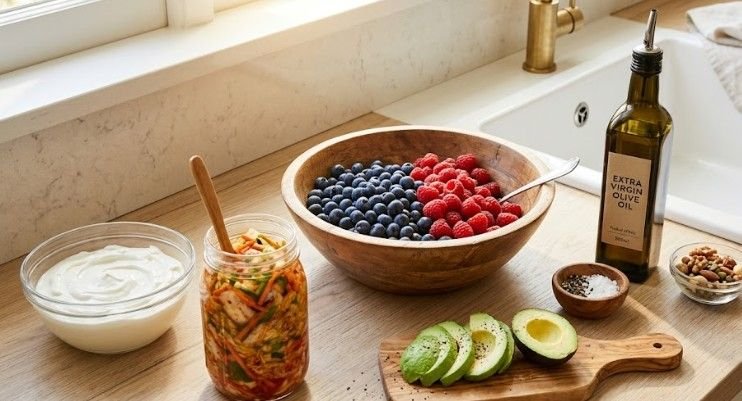
    Fermented foods can introduce live, beneficial bacteria directly into your microbiome. Easy options include plain Greek yogurt, kefir, kimchi, sauerkraut, miso, and tempeh.
    Johns Hopkins Medicine often highlights digestion-friendly foods like Greek yogurt, kefir, kimchi, and sauerkraut. Choose lower-sugar yogurt and kefir, and watch sodium in packaged options.

    High-Fiber Foods For Prebiotics

    High-fiber foods act like fuel for good gut bacteria. Beans, lentils, chickpeas, oats, apples, bananas, vegetables, and whole grains help support digestive balance.

    Start with small servings if your current diet is low in fiber. Half a cup of beans or a bowl of oats is a smart beginning.

    Viscous Fiber Foods

    Viscous Fiber Foods

    Viscous fiber forms a gel-like texture during digestion. Whole oats, berries, chia seeds, apples, and barley are beginner-friendly foods that fit this category.
    These foods may help produce short-chain fatty acids, which support the gut lining. They also make meals feel more filling.

    Resistant Starch Foods

    Resistant starch resists digestion in the small intestine and reaches the colon, where gut bacteria can use it as fuel.
    Good choices include beans, lentils, chickpeas, cooled potatoes, cooled rice, and green, unripe bananas. Add them gently if you get bloated easily.

    More Foods Your Gut Loves

    Gut health also depends on colorful plant compounds, healthy fats, and steady meal habits.

    Polyphenol-Rich Foods

    Polyphenols are plant compounds found in colorful fruits, vegetables, green tea, cocoa, herbs, and dark chocolate. They act like antioxidants and may support healthy bacteria.
    Berries, leafy greens, apples, red cabbage, extra-virgin olive oil, and unsweetened green tea are simple ways to add them.

    Seeds And Nuts

    Flaxseeds and chia seeds add fiber, omega-3 fats, and bulk that can help support regular digestion. Walnuts, almonds, and pistachios also bring fiber and healthy fats.
    Try one tablespoon of chia or ground flax in oatmeal, yogurt, or smoothies. Small portions are powerful and easier on the stomach.

    Leafy Greens And Legumes

    Leafy greens like spinach, kale, collards, and romaine add fiber, magnesium, and plant compounds. Legumes like beans and lentils bring prebiotic fiber and steady energy.
    A simple lentil soup with spinach is a strong gut-friendly meal. It is warm, filling, affordable, and easy to batch cook.

    Applying What To Eat For Gut Health Daily

    Learning what to eat for gut health works best when you turn it into repeatable steps, not strict rules.

    Applying What To Eat For Gut Health Daily

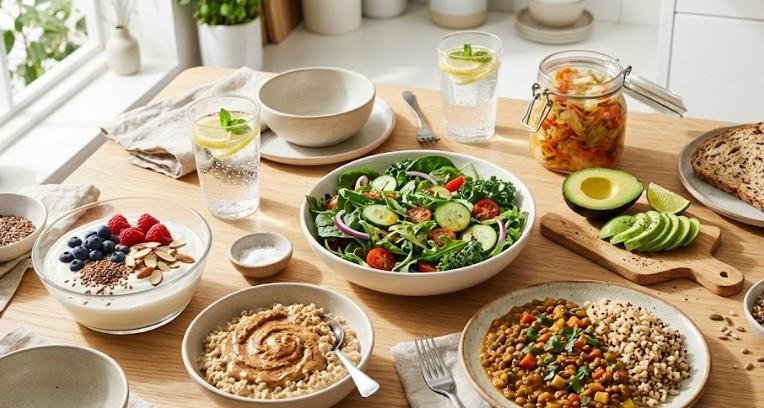
    Start with breakfast. Choose oats with berries, yogurt, and chia seeds, or whole-grain toast with avocado and eggs. This gives your gut fiber, protein, and helpful nutrients early.
    At lunch, add one plant-based fiber source. A bowl with brown rice, black beans, spinach, salsa, avocado, and plain yogurt is simple and satisfying.

    At dinner, pair salmon, chicken, tofu, or beans with roasted vegetables and a whole grain. Add a small serving of fermented food if you enjoy it.

    Foods To Limit For A Happier Gut

    Gut health is not about being perfect, but some foods can crowd out better choices. Highly processed snacks, sugary cereals, sweet drinks, fast food, and processed meats are often low in fiber. Having them often may make it harder to build a diverse gut routine.

    Alcohol, heavy fried foods, and too much added sugar may also bother digestion for some people. Notice how your body responds, then adjust without guilt.

    Simple Gut-Friendly Day

    For breakfast, try oatmeal with berries and yogurt. For lunch, eat lentil soup. And For dinner, choose bean chili with roasted vegetables.

    Trusted Expert Resources

    Expert resources can help you go deeper without getting lost in diet trends and plan a balanced meal. Johns Hopkins Medicine is useful for digestion-friendly food guidance. Hartford HealthCare shares practical lists of gut-supportive foods. The Canadian Digestive Health Foundation offers clear tips on fiber, probiotics, and daily gut habits.

    Use expert resources for education, but personalize slowly. If you have ongoing pain, major bowel changes, food intolerance, or a medical condition, speak with a qualified healthcare professional.

    Frequently Asked Questions 

    1. What Is The Best Thing To Eat For Gut Health?

    A strong choice is plain Greek yogurt with oats, berries, and chia seeds. It combines probiotics, prebiotic fiber, plant compounds, and protein in one easy beginner-friendly meal.

    2. What Is The 7 Day Gut Reset?

    A 7 day gut reset means eating more plants, fiber, fermented foods, and water for one week while reducing added sugar, alcohol, and ultra-processed foods.

    3. What Can I Drink For My Gut?

    Water should be your main drink because it helps fiber move through your system. Kefir, low-sugar kombucha, ginger tea, peppermint tea, and whole-fruit smoothies can also help.

    4. What To Eat To Cleanse Your Gut?

    Your gut does not need a harsh cleanse. Eat oats, beans, lentils, berries, leafy greens, yogurt, kefir, chia seeds, and drink enough water daily.

    Final Crunch: Feed Your Gut Happy

    The best answer to what to eat for gut health is not a strict diet or a magic drink. It is a steady mix of fermented foods, prebiotic fiber, colorful plants, seeds, nuts, legumes, leafy greens, and water. Start with one meal, build slowly, and let your gut enjoy the friendly upgrade.

  • Anti Inflammatory Diet Food List To Upgrade Your Daily Meals

    Anti Inflammatory Diet Food List To Upgrade Your Daily Meals

    A colorful plate can do more than look pretty. This anti inflammatory diet food list helps make daily meals simpler, smarter, and friendlier for beginners who want better food choices without feeling trapped by strict diet rules.

    Inflammation is not always bad. Your body uses it to heal cuts, fight germs, and recover from stress. The problem begins when poor food habits, low fiber meals, sugary drinks, fried snacks, and processed foods become everyday patterns. That is when healthy eating can make a real difference.

    What Is An Anti-Inflammatory Diet?

    This eating style is all about choosing foods that support your body instead of overwhelming it.

    Simple Meaning

    An anti-inflammatory diet is a food pattern built around ultra and minimally processed ingredients. Fruits, vegetables, whole grains, beans, fish, nuts, seeds, olive oil, herbs, and spices are the main players.

    It is not a short crash diet or a magic cleanse. It is a steady way of eating that gives your body more fiber, vitamins, minerals, antioxidants, and healthy fats across the week.

    Real Life Goal

    The real goal is balance. You do not need to remove every favorite food from your kitchen. You simply make anti-inflammatory foods appear more often on your plate.

    For example, you might add blueberries to breakfast, spinach to lunch, salmon to dinner, and green tea instead of a sugary drink. Small swaps can build a strong routine.

    Key Anti-Inflammatory Foods

    These foods are easy to find, simple to cook, and useful for everyday healthy eating.

    Fatty Fish

    Salmon, mackerel, sardines, tuna, and herring are rich in omega-3 fatty acids. These healthy fats are one reason fatty fish is often recommended in anti-inflammatory meal plans.

    Try baked salmon with quinoa and broccoli, sardines on whole-grain toast, or tuna in a salad with olive oil dressing. Two fish meals a week can be a realistic starting point for many beginners.

    Fruits

    Blueberries, strawberries, oranges, apples, cherries, grapes, and pomegranates bring antioxidants, fiber, and natural sweetness. Berries are especially easy because they work in oatmeal, yogurt, smoothies, and snacks.

    Fruit also helps replace sugary desserts in a gentle way. Instead of forcing yourself to quit sweets overnight, start by adding fruit after meals or keeping washed berries ready in the fridge.

    Vegetables

    Spinach, kale, broccoli, bell peppers, carrots, tomatoes, onions, mushrooms, and cauliflower are strong choices. Leafy greens and colorful vegetables bring fiber, vitamins, minerals, and protective plant compounds.

    A simple trick is to eat more vegetables with meals you already eat. Put spinach in eggs, peppers in wraps, broccoli with rice, or tomatoes into pasta. Healthy eating becomes easier when it feels familiar.

    More Foods To Add

    These pantry-friendly foods make the diet easier to follow every day.

    More Foods To Add

    Nuts And Seeds

    Walnuts, almonds, chia seeds, flaxseeds, pumpkin seeds, and hemp seeds are small but powerful. They add healthy fats, plant protein, minerals, and crunch to meals.

    Sprinkle chia seeds into yogurt, add walnuts to oatmeal, or keep almonds as a simple snack. Use small portions because nuts and seeds are nutrient-dense and filling.

    Healthy Oils

    Extra-virgin olive oil is one of the best oils for this eating style. It works well in salad dressings, roasted vegetables, grain bowls, and simple dips.

    Use olive oil instead of butter-heavy sauces or creamy packaged dressings when possible. The goal is not to drown food in oil, but to use better fats in smarter amounts.

    Whole Grains

    Oats, quinoa, brown rice, barley, farro, whole wheat bread, and whole grain pasta give steady energy and fiber. They are better everyday choices than refined white bread, sugary cereals, and pastries.

    Whole grains also make meals satisfying. A bowl with brown rice, beans, vegetables, avocado, and olive oil dressing can feel hearty without relying on fried or processed foods.

    Flavor Boosters That Help

    Healthy food should taste good, or it will not last.

    Spices And Teas

    Spices And Teas

    Turmeric, ginger, garlic, cinnamon, black pepper, rosemary, and oregano can make simple meals taste warm and rich. These ingredients are often used in anti-inflammatory cooking because they contain helpful plant compounds.

    Green tea is another easy add-on. It can replace soda, sweet tea, or extra coffee during the day. Drink it plain or with lemon for a fresh, simple habit.

    Fermented Foods

    Yogurt, kefir, kimchi, sauerkraut, miso, and tempeh can support gut-friendly eating. A healthy gut is closely connected to better overall food balance and digestion.

    Choose plain yogurt or kefir when possible, because flavored versions can contain a lot of added sugar. Add fruit, cinnamon, or nuts for natural flavor.

    Foods To Limit

    Knowing what to reduce makes the list more complete.

    Refined Carbs

    White bread, regular pastries, sugary cereals, cookies, cakes, and many packaged snacks are low in fiber and easy to overeat. They digest quickly and often leave you hungry again.

    You do not have to ban them forever. Just choose healthy carbs. Start by replacing one refined carb each day with oats, quinoa, brown rice, sweet potatoes, beans, or whole grain bread.

    Trans Fats And Fried Foods

    Fried fast foods, packaged pastries, shortening, and some ultra-processed snacks can work against your healthy eating goals. These foods are often high in unhealthy fats, salt, and calories.

    Try roasting, grilling, baking, or air frying instead. Crispy roasted chickpeas, baked sweet potato wedges, and oven-baked fish can still feel satisfying.

    Sugary Drinks And Processed Meats

    Soda, sweet tea, energy drinks, processed juices, bacon, hot dogs, sausage, pepperoni, and deli meats are best kept occasional. They add sugar, sodium, or processed ingredients without much nutritional value.

    A friendlier swap is water with fruit, green tea, sparkling water, grilled chicken, beans, lentils, eggs, tofu, or fish. These choices support fuller, cleaner meals.

    How To Use The List

    Here is how to bring an anti inflammatory diet food list into normal life without stress.

    How To Use The List

    Start With Breakfast

    Begin with one meal instead of changing your whole kitchen. Breakfast is a great place to start because oats, berries, yogurt, chia seeds, walnuts, and cinnamon are easy to combine. A simple bowl of oatmeal with blueberries and walnuts gives fiber, antioxidants, healthy fats, and steady energy. That is a strong start without complicated cooking.

    Build A Better Plate

    At lunch or dinner, fill half your plate with vegetables or fruit. Add one protein such as salmon, beans, eggs, tofu, yogurt, or chicken. Then add a whole grain like quinoa, oats, brown rice, or whole wheat bread.

    Finish with a healthy fat such as olive oil, avocado, nuts, or seeds. This simple plate method works for bowls, salads, wraps, soups, and leftovers.

    Shop With A Plan

    Before shopping, choose two fruits, three vegetables, one whole grain, one bean or lentil, one healthy fat, and one protein. This keeps your cart focused and your meals flexible.

    Keep basics like oats, brown rice, canned beans, olive oil, frozen berries, frozen spinach, turmeric, ginger, and green tea at home. These staples make healthy eating easier on busy days.

    Frequently Asked Questions

    1. What Are The Strongest Anti-Inflammatory Foods?

    The strongest choices include berries, leafy greens, salmon, sardines, olive oil, walnuts, chia seeds, beans, turmeric, ginger, green tea, and fermented foods because they provide fiber, antioxidants, and healthy fats.

    2. What Is The 21 Day Anti-Inflammatory Diet?

    The 21 day anti-inflammatory diet is a short eating plan that focuses on whole foods, colorful produce, lean proteins, fatty fish, whole grains, nuts, seeds, and fewer processed or sugary foods.

    3. What Is The Best Anti-Inflammatory Diet?

    The best anti-inflammatory diet is usually a Mediterranean-style pattern because it includes vegetables, fruits, fish, olive oil, beans, whole grains, nuts, herbs, and balanced meals that are easy to repeat.

    4. How Do You Flush Out Inflammation In Your Body?

    You cannot flush inflammation instantly, but you can support your body with water, sleep, movement, stress control, fiber-rich meals, omega-3 foods, and fewer fried, sugary, and ultra-processed items from your anti inflammatory diet food list.

    Final Bite: Eat Bright, Feel Right

    A smart anti inflammatory diet food list makes healthy eating feel less like a rulebook and more like a colorful kitchen guide. Start with fruits, vegetables, fatty fish, nuts, seeds, olive oil, whole grains, spices, teas, and fermented foods. 

    Reduce refined carbs, trans fats, fried foods, sugary drinks, and processed meats. Keep it simple, stay consistent, and let better meals become your everyday rhythm.

  • How To Eat More Fiber Without Changing Your Diet Fast

    How To Eat More Fiber Without Changing Your Diet Fast

    I like my regular meals, and I do not enjoy dramatic food makeovers. That is why learning how to eat more fiber without changing your diet became one of the easiest nutrition upgrades I have ever made. I kept the same tacos, pasta, rice bowls, soups, snacks, and breakfasts. I simply changed what went inside them.

    Fiber matters because most Americans do not get enough. Harvard’s Nutrition Source says adults need at least 25 to 35 grams daily, while most Americans get about 15 grams. Fiber supports fullness, digestion, blood sugar control, and bowel regularity. The FDA also recognizes certain fibers for benefits like lowering blood glucose, lowering cholesterol, reducing calorie intake, and increasing bowel movement frequency.

    Why This Works Better Than Starting Over

    The usual advice says to eat more vegetables, switch to whole grains, and add beans. That advice is useful, but it can feel like a full diet change. I prefer a quieter method.

    The trick is not replacing your whole plate. It is making your current plate work harder. When I add lentils to taco meat, beans to sauces, seeds to yogurt, or popcorn to snack time, I do not feel restricted. I just get more fiber from food I already enjoy.

    This approach also helps avoid digestive shock. A sudden jump in fiber can cause gas, bloating, or discomfort. Increasing slowly and drinking enough fluids makes the change easier.

    Invisible Ingredient Swaps That Add More Fiber

    Stretch Meat With Lentils

    Stretch Meat With Lentils

    One of my favorite fiber tricks is the lentil stretch. I replace about 30% of ground meat with cooked brown lentils in tacos, burgers, meat sauce, sloppy joes, or bolognese.

    Lentils absorb seasoning well. In taco meat, they blend into the texture instead of standing out. The meal still tastes familiar, but it becomes more filling and fiber-rich.

    This is a smart move for anyone searching for easy ways to increase fiber intake without eating a separate “healthy” side dish.

    Blend White Beans Into Creamy Foods

    White beans are almost invisible in creamy meals. I mash canned cannellini or navy beans into mashed potatoes, potato soup, creamy pasta sauce, or casseroles.

    They add body without changing the color much. They also make sauces feel thicker, which helps when I want comfort food that still supports digestion.

    For best results, rinse canned beans first. Then blend or mash them before adding them to the dish.

    Mix Barley Into Rice

    If plain white rice is part of your routine, do not remove it. Mix it. I like replacing half the rice with cooked pearl barley.

    Barley has a chewy bite, so it fits well in rice bowls, soups, stuffed peppers, and meal-prep containers. This adds more soluble fiber while keeping the meal familiar.

    A simple ratio works best: half rice and half barley. That way, the texture changes slightly, not dramatically.

    Stealth Fiber Boosters For Everyday Meals

    Stealth Fiber Boosters For Everyday Meals

    Add Chia Or Ground Flax

    Chia seeds and ground flaxseeds are small but powerful. I stir one tablespoon into yogurt, oatmeal, smoothies, pancake batter, or overnight oats.

    This adds fiber without increasing the meal size much. Ground flax works better in baked foods and oatmeal. Chia works well in yogurt and smoothies because it thickens slightly.

    This is one of the easiest healthy fiber swaps because it takes less than 10 seconds.

    Buy High-Fiber Versions Of Your Usual Foods

    This is the laziest upgrade, and I mean that as a compliment. I buy higher-fiber versions of foods I already use.

    High-fiber bread, whole-wheat pasta, bean-based pasta, high-fiber tortillas, and cereals with at least 5 grams of fiber per serving can quietly improve your day.

    You still eat toast, pasta, wraps, and cereal. You just choose versions that give you more fiber per bite.

    Use Fiber Supplements Carefully

    Unflavored psyllium husk or wheat dextrin can help when food alone is not enough. The FDA notes that certain isolated or synthetic fibers can count as dietary fiber when they show beneficial physiological effects.

    I treat supplements as backup, not the main plan. Start small, follow the label, and drink enough water. Psyllium can thicken quickly, so mix and drink it right away.

    People with digestive conditions, swallowing issues, or medication schedules should ask a clinician first.

    Small Habits That Increase Fiber Intake

    Stealth Fiber Boosters For Everyday Meals

    Leave The Skins On

    Peeling fruits and vegetables removes useful fiber. I keep skins on apples, pears, peaches, cucumbers, and potatoes when the recipe allows it.

    This habit takes no extra cooking. Just wash produce well and keep the edible skin.

    Eat Fiber First

    The “fiber first” sequence is simple. If vegetables, salad, beans, or fruit are already on the plate, eat them first.

    This does not change the meal. It changes the order. It may also help you feel satisfied sooner because fiber slows digestion and supports fullness. Harvard notes that fiber helps regulate the body’s use of sugars and supports hunger control.

    Switch Snacks Without Feeling Restricted

    Air-popped popcorn is my favorite snack swap. It is a whole grain and gives a crunchy, salty snack feeling without needing chips.

    Three cups of air-popped popcorn can offer nearly 4 grams of fiber. Add light seasoning, not heavy butter, if you want it to stay useful.

    My 3-Day Fiber Upgrade Example

    Here is a realistic example of how I would increase fiber without changing my normal meals.

    On day one, I add ground flax to breakfast yogurt and keep the skin on my apple. On day two, I mix lentils into taco meat and choose a high-fiber tortilla. On day three, I add white beans to creamy soup and snack on popcorn.

    That small plan can add several grams of fiber daily without turning meals into salad punishment. It also keeps fiber increases gradual, which helps reduce bloating.

    Sass, Fiber, And Zero Drama

    You do not need to break up with your favorite meals. You just need to make them carry more fiber. Start with one invisible change this week: lentils in meat, beans in sauce, seeds in breakfast, barley in rice, or popcorn at snack time.

    That is the real answer to how to eat more fiber without changing your diet: upgrade the food you already trust, keep it gradual, and let your gut enjoy the quiet glow-up.

    FAQs

    1. How can I add fiber without eating more vegetables?

    Add chia, ground flax, lentils, beans, barley, high-fiber bread, or popcorn to meals you already eat.

    2. What is the easiest fiber swap for beginners?

    Start with one tablespoon of chia or ground flax in yogurt, oatmeal, or smoothies.

    3. Can I eat more fiber without changing my meals?

    Yes, use invisible swaps like lentils in meat, beans in sauces, and high-fiber versions of regular groceries.

    4. Why do I feel bloated after adding fiber?

    You may be adding too much too fast, so increase slowly and drink more water.