
Menopause changes more than hormone levels. It also affects how our bodies maintain bone strength. As estrogen declines, bone breakdown can accelerate, increasing the risk of osteoporosis and fractures. Fortunately, making thoughtful food choices can help protect bone health.
I believe the easiest way to support stronger bones is to build healthy eating habits rather than rely entirely on supplements. Including calcium-rich foods for postmenopausal women in everyday meals can help maintain adequate calcium intake. From creamy yogurt to calcium-fortified tofu, several affordable options can make a meaningful difference after 50.
Estrogen helps regulate bone remodeling, the natural process through which old bone tissue breaks down and new bone develops. After menopause, declining estrogen levels can cause bone breakdown to outpace rebuilding.
This accelerates bone density loss and increases osteoporosis risk. Calcium supplies essential minerals for maintaining bone structure, while vitamin D supports intestinal calcium absorption.
According to the National Institutes of Health, women ages 51 and older need approximately 1,200 milligrams of calcium daily, compared with 1,000 milligrams for women ages 19–50.
A balanced diet, adequate protein, strength training, and weight-bearing exercise work together to support healthy bones.
The best foods for bone health after menopause include traditional dairy products, seafood, leafy vegetables, and fortified plant-based alternatives.
An eight-ounce glass of cow’s milk provides approximately 300 milligrams of calcium.
Whole, low-fat, and skim milk offer comparable calcium amounts, making milk a convenient choice for breakfast or snacks. Lactose-free milk is also available in most American supermarkets.
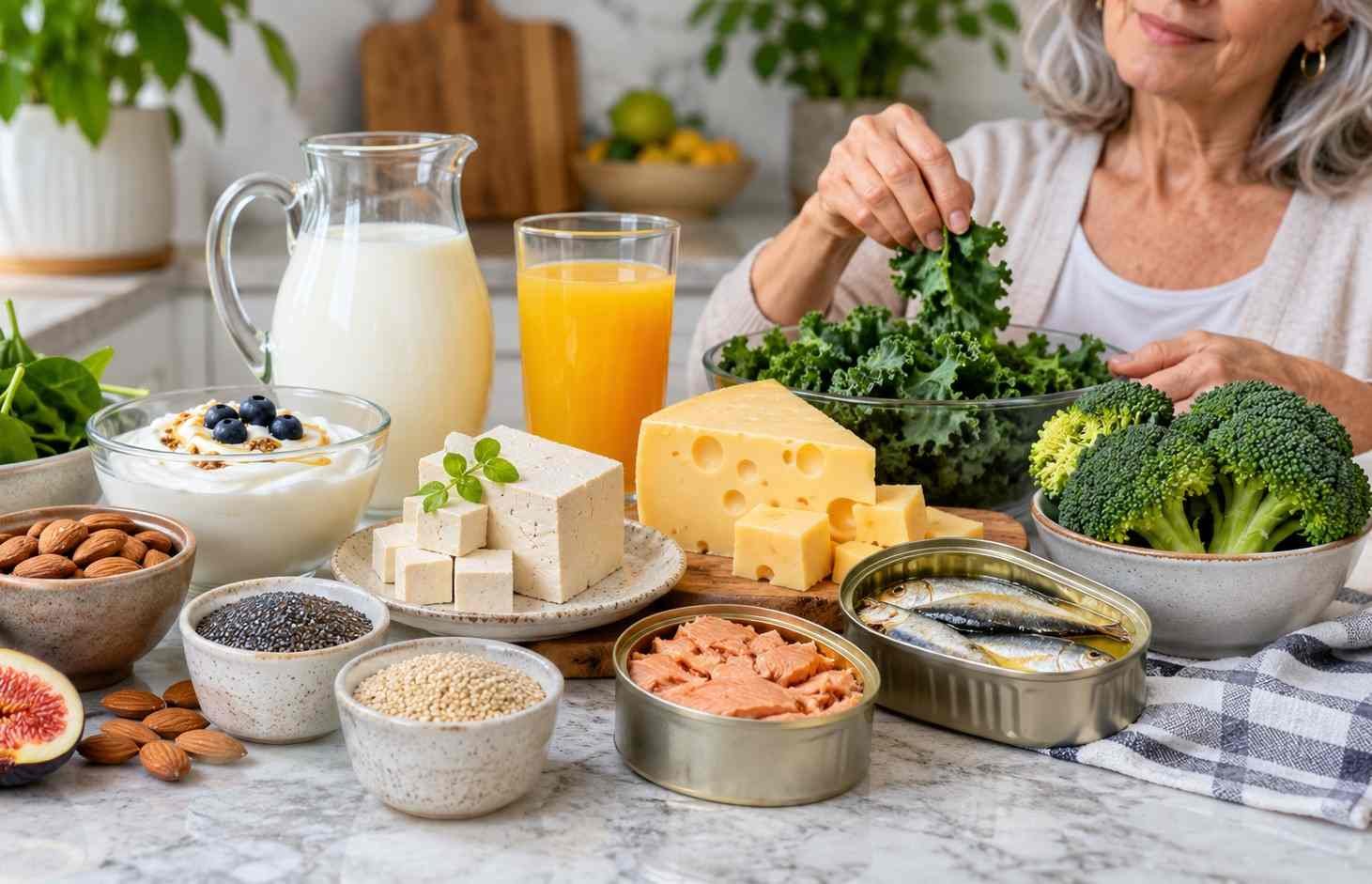
A six-ounce serving of plain low-fat yogurt provides approximately 310 milligrams of calcium.
Yogurt also contains protein, and varieties with live cultures may support digestive health. I prefer recommending unsweetened varieties because they allow women to control added sugar.
Cheddar, mozzarella, ricotta, Parmesan, and feta provide dietary calcium.
One ounce of cheddar contains approximately 205 milligrams, while four ounces of part-skim ricotta provide around 335 milligrams.
Enjoy moderate portions because some cheeses contain considerable sodium and saturated fat.
Canned fish with soft, edible bones offers natural calcium sources for osteoporosis prevention efforts.
Three ounces of sardines with bones contain approximately 325 milligrams of calcium. The same amount of canned salmon with bones provides around 180 milligrams.
Both contribute protein and omega-3 fatty acids, while salmon can also provide vitamin D.
Calcium-set tofu is among the most practical non-dairy calcium sources for women.
Some varieties provide several hundred milligrams per serving, depending on processing. Look for calcium sulfate in the ingredients and check the Nutrition Facts label.
Tofu also supplies plant-based protein, making it useful for vegetarian and vegan meals.
Fortified soy, almond, and oat milk can help women meet their calcium requirements without traditional dairy.
Many fortified beverages provide approximately 300–450 milligrams per eight-ounce serving.
Choose unsweetened varieties fortified with calcium and vitamin D. Shake cartons before pouring because added calcium may settle at the bottom.
Cooked collard greens provide approximately 266 milligrams of calcium per cup, while cooked kale contains around 179 milligrams.
Bok choy offers approximately 160 milligrams per cooked cup, and broccoli contributes smaller amounts.
These low-oxalate vegetables are useful additions to meals because their calcium is generally more absorbable than calcium from spinach.
Beans provide calcium alongside protein, fiber, and other essential nutrients.
A cup of cooked soybeans contains approximately 175 milligrams of calcium. White beans also contribute useful amounts.
I recommend including beans in vegetable soups, salads, chili, and grain bowls for a more balanced eating pattern.
Almonds provide approximately 75 milligrams of calcium per ounce, while chia seeds contain roughly 180 milligrams.
Both foods contribute fiber and beneficial fats.
Adding chia seeds to oatmeal or enjoying almonds with fruit creates simple calcium-rich breakfast ideas for women over 50.
Two dried figs provide approximately 65 milligrams of calcium.
Although figs cannot replace major calcium sources, they offer fiber and a convenient alternative to heavily processed sweets.
Pair them with plain yogurt for a nutrient-rich afternoon snack.

Some calcium-fortified orange juices contain approximately 300 milligrams of calcium per eight-ounce glass.
Fortified juices may provide calcium with relatively good absorption, depending on the added calcium compound.
However, whole oranges offer more fiber. Choose juice without added sugar and consider smaller portions, especially when managing blood sugar.
Calcium-fortified cereals and oatmeal provide convenient ways to increase dietary calcium.
Fortification levels vary significantly, so compare Nutrition Facts labels.
Choose whole-grain, lower-sugar products and combine them with milk or fortified soy milk for additional calcium and protein.
Getting enough calcium matters, but improving absorption is equally important.
The body absorbs a smaller percentage of calcium as the amount consumed at one time increases.
Calcium supplement absorption is generally highest at doses of 500 milligrams or less. Instead of taking large supplemental doses together, divide them when medically appropriate.
For food-based calcium, distributing dairy, vegetables, and fortified foods across meals creates a practical routine.
Vitamin D helps the intestines absorb calcium.
Fortified milk, egg yolks, and oily fish can contribute to vitamin D intake. Safe, limited sunlight exposure also supports vitamin D production, although effectiveness varies with season, location, and skin exposure.
Women with inadequate vitamin D intake should discuss supplementation with a healthcare professional.
High sodium consumption increases urinary calcium loss. Reduce heavily salted packaged foods and choose lower-sodium alternatives.
Very high caffeine intake may also modestly affect calcium balance, particularly when dietary calcium is inadequate. Moderate coffee consumption generally does not require elimination.
Calcium can temporarily reduce iron absorption when consumed together, particularly in supplement form.
Women taking iron supplements may benefit from separating them from calcium supplements according to medical advice.
However, avoiding calcium-rich and iron-rich foods during the same meal is generally unnecessary.
Spinach contains calcium, but oxalates limit its absorption to approximately 5%.
Kale, bok choy, and broccoli contain more readily absorbable calcium. Including these vegetables helps improve overall calcium availability.

A healthy meal plan can include everyday ingredients available in American grocery stores.
For breakfast, I recommend plain low-fat yogurt with chia seeds, berries, and whole-grain toast.
Lunch could include canned salmon with edible bones, leafy greens, white beans, and olive oil dressing.
For an afternoon snack, enjoy a glass of fortified soy milk with almonds or dried figs.
Dinner might feature calcium-set tofu, sautéed bok choy, broccoli, and brown rice.
Depending on portions and product fortification, these meals can provide approximately 1,200 milligrams of calcium or more. Check product labels to calculate actual intake.
Calcium supplements may help women who cannot meet their daily requirements through food.
However, supplements are not necessary for everyone. Excessive calcium intake can cause constipation and may increase kidney stone risk in susceptible individuals.
A healthcare professional can recommend an appropriate dose based on dietary intake, medications, and individual bone-health risks.
The best calcium-rich foods for postmenopausal women include milk, yogurt, cheese, sardines, canned salmon, calcium-set tofu, fortified plant milk, and leafy greens. Eating a combination of these foods supports adequate calcium intake.
Yes. Calcium-fortified plant beverages, tofu, leafy vegetables, canned fish with bones, and fortified cereals can help women meet their nutritional requirements without dairy products.
Regularly consuming dairy products, fortified foods, calcium-rich vegetables, and canned fish with bones can help prevent inadequate calcium intake. Vitamin D also supports effective absorption.
Food is generally the preferred calcium source because it provides additional nutrients. Supplements may help fill dietary gaps, but individual requirements should guide their use.
Protecting bone health after menopause does not require expensive products or restrictive diets. Consistent, balanced nutrition offers a practical starting point.
I believe choosing calcium-rich foods for postmenopausal women throughout the day is one of the simplest ways to support long-term bone health. Incorporating healthy meal prep ideas for weight loss can also make it easier to plan nutrient-dense meals while maintaining a healthy weight. Combining adequate calcium with vitamin D, protein, and regular physical activity can help maintain strength and mobility as women age.
The goal is not just meeting a daily number. It is developing sustainable habits that support healthier bones for years to come.