I learned how to read nutrition labels correctly after realizing my “single snack” was actually three servings. That tiny detail changed the calories, sodium, sugar, and fat completely. A Nutrition Facts label is not just a box of numbers. It is a shortcut for deciding whether a packaged food fits your day.
The FDA says all nutrient amounts on a Nutrition Facts label are based on the listed serving size, not the whole package unless the package contains one serving. That is why the first smart move is simple: read from the top down.
Serving size tells you the amount used to calculate every number on the label. It may be cups, grams, pieces, slices, or fluid ounces. It is not always the amount you personally eat.
Servings per container shows how many servings are inside the full package. This is where many people get tricked. If a bag of chips lists 150 calories per serving but has three servings, eating the whole bag means 450 calories.
I use this quick label test before buying: “Will I eat one serving or the full package?” That one question makes the label honest.
Calories show the energy you get from one serving. They are useful, but they should not be the only thing you judge. A 250-calorie snack with fiber and protein may keep you full longer than a 120-calorie snack loaded with added sugar.
If you want how to read nutrition labels correctly in real life, compare calories with serving size. A small serving with high calories may still fit your day, but you should know what you are choosing.
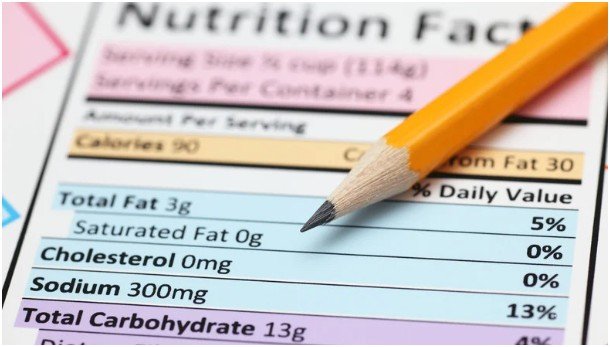
The % Daily Value, or %DV, shows how much one serving contributes to a 2,000-calorie daily diet. The FDA’s simple rule is easy to remember: 5% DV or less is low, and 20% DV or more is high.
I use 5% and 20% as a quick grocery-store filter. For nutrients to limit, low is better. For nutrients to get more of, high is better.
Choose lower %DV for saturated fat, sodium, and added sugars. Choose higher %DV for fiber, vitamin D, calcium, iron, and potassium. The FDA recommends this same general pattern.

A product can look healthy on the front and still carry high amounts of sodium, added sugar, or saturated fat. The back label gives the real story.
Saturated fat should stay low, especially if you eat packaged foods often. Trans fat should be avoided as much as possible. Even when a label says 0 grams, check the ingredient list for partially hydrogenated oils.
Sodium deserves attention because packaged and prepared foods can raise your intake quickly. The CDC says Americans consume more than 3,300 mg of sodium per day on average, above the federal recommendation of less than 2,300 mg for teens and adults.
When comparing soups, sauces, frozen meals, or deli items, I pick the lower-sodium option when taste and price are close.
Added sugars are different from natural sugars found in foods like fruit or milk. They add sweetness without much nutrition. The Dietary Guidelines for Americans recommend limiting foods and drinks higher in added sugars, saturated fat, and sodium.
Reading labels should not only be about restriction. I get better results when I look for what a food gives me.
Fiber supports digestion and fullness. Protein helps with muscle maintenance and steadier hunger. Calcium, iron, potassium, and vitamin D are also worth checking because many people do not get enough through daily meals.
If you are working on fiber, connect this habit with eating more fiber without changing your diet, so your food swaps feel easier.

Ingredients appear in descending order by weight. The first few ingredients usually make up most of the food.
When sugar appears near the top, I pause. It may appear as cane sugar, dextrose, maltose, corn syrup, high fructose corn syrup, or fruit juice concentrate. A long ingredient list is not always bad, but it should make sense.
This is one of the easiest ways to understand how to read nutrition labels correctly without needing nutrition training.
Imagine a granola pouch lists one serving as 1/3 cup. The label shows 180 calories, 8 grams added sugar, and 120 mg sodium. The pouch has three servings.
If I eat the full pouch, I get 540 calories, 24 grams added sugar, and 360 mg sodium. The label did not lie. I just had to multiply.
That is my favorite practical trick: serving size first, then multiply by the amount I will actually eat.
Check the serving size first because every calorie and nutrient number depends on it.
It means one serving is high in that nutrient, based on a 2,000-calorie daily diet.
Look for sugar names like dextrose, maltose, corn syrup, cane sugar, and fruit juice concentrate.
It helps you compare foods, control portions, limit excess sugar or sodium, and choose better options.
A food label should not make eating feel complicated. It should help you make faster, smarter choices. Start with serving size, use the 5/20 rule, limit sodium and added sugar, and look for fiber and protein.
My rule is simple: never trust the front of the package until the back label has spoken.