Meal prepping can save hours during a busy week, but eating identical lunches five days in a row can make even your favorite recipe feel unappealing. The problem isn’t necessarily the ingredients. It’s the lack of variety.
Learning how to meal prep without getting bored of eating the same food starts with changing what you prepare. Instead of cooking complete meals in advance, prepare flexible ingredients that can become different dishes.
With a few proteins, grains, vegetables, and flavorful additions, you can enjoy fresh combinations throughout the week without cooking from scratch every evening.
Most meal prep routines prioritize convenience over enjoyment. People cook one recipe, divide it into containers, and repeat it until everything disappears.
Although practical, this approach leaves little room for changing cravings.
Meals also lose some of their appeal during storage. Crispy vegetables soften, sauces soak into grains, and reheated ingredients may develop different textures.
Another overlooked problem is overplanning. Preparing every meal for the week removes flexibility when your appetite or schedule changes.
The solution isn’t abandoning meal preparation. It’s creating a system that combines convenience with choice.
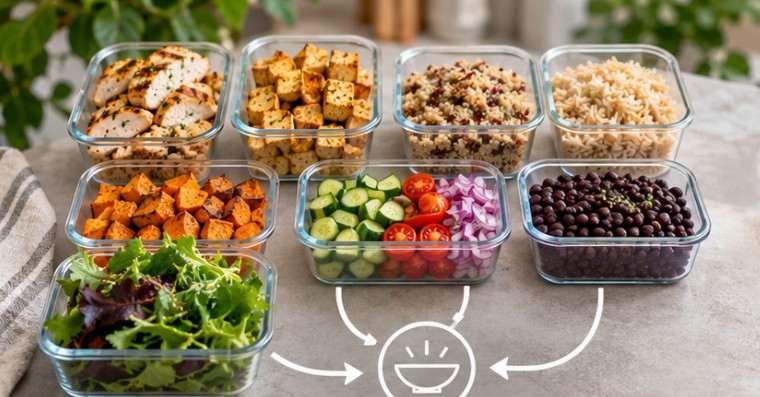
One of the most effective meal prep strategies is component-based cooking. Rather than preparing complete recipes, cook ingredients separately and combine them shortly before eating.
The USDA’s MyPlate meal planning guidance recommends preparing versatile ingredients, including grains, vegetables, and proteins, that work across several dishes.
Choose foods from three main categories.
For example, roasted chicken, quinoa, and vegetables can become a grain bowl, warm wrap, or hearty salad.
The ingredients remain familiar, but the eating experience changes.
This approach also reduces preparation time because several meals share the same cooking work.

Changing the flavor profile of a meal often requires less work than preparing an entirely new recipe.
Consider plain chicken and brown rice. Add salsa and avocado for a Tex-Mex-inspired bowl, or use lemon dressing and feta for a Mediterranean-style lunch.
Keep three sauces available each week:
Sauces can contain substantial amounts of sodium or added sugar. The American Heart Association’s guide on using healthier condiments recommends comparing products and using herbs, spices, and homemade alternatives.Store dressings separately until serving. This preserves texture and makes it easier to adjust flavors.
Flavor isn’t the only reason repeated meals become uninteresting. Texture matters, too. A bowl containing soft rice, tender chicken, and steamed vegetables may taste pleasant initially but feel monotonous after several servings.
Add contrast with fresh ingredients. Try toasted pumpkin seeds over roasted vegetables, sliced radishes in grain bowls, or chopped cucumbers alongside warm proteins.
Fresh herbs, citrus wedges, pickled onions, and shredded cabbage also provide variety without requiring another major cooking session. Keep crunchy toppings separate until mealtime so they don’t become soggy.
A useful way to understand how to meal prep without getting bored of eating the same food is to plan transformations rather than repetitions. Start with a batch of lightly seasoned shredded chicken.
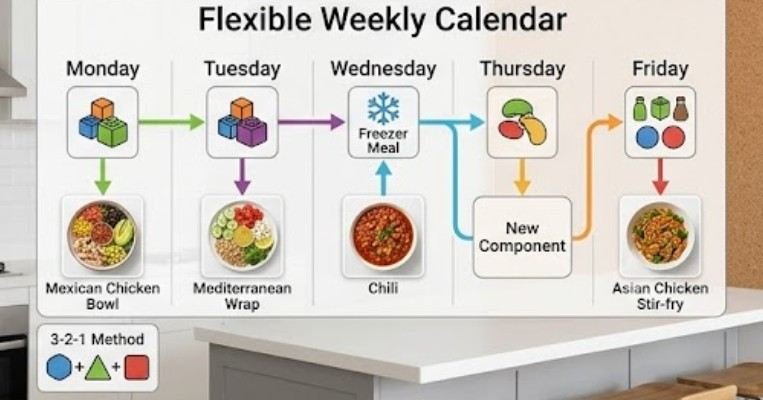
Combine chicken with brown rice, black beans, corn, salsa, and avocado.
Finish with lime juice and cilantro.
Place chicken inside a whole-wheat tortilla with cucumber, tomato, lettuce, and a yogurt-based dressing.
Serve with fruit or raw vegetables.
Warm chicken with broccoli, carrots, ginger, and reduced-sodium soy sauce. Serve over rice or noodles. These meals share a protein but offer different flavors, temperatures, textures, and presentations.
The same method works with lentils, chickpeas, or tofu. For more meat-free combinations, explore the benefits of a plant-based diet.
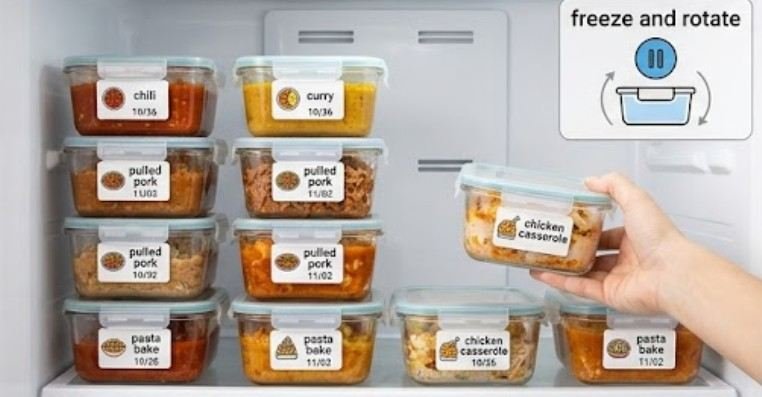
Freezing extra servings helps prevent the familiar midweek problem of having plenty of prepared food but nothing appealing to eat.
Prepare a large batch of chili, vegetable soup, or turkey meatballs. Refrigerate the portions needed soon and freeze the extras immediately. On another day, replace a planned lunch with something from your freezer.
According to FoodSafety.gov’s cold storage chart, cooked meat and poultry leftovers generally remain refrigerated safely for three to four days.
For safe storage:
Freezing preserves safety when done properly, although quality gradually declines during extended storage.
If planning feels overwhelming, use a simple framework that provides variety without requiring numerous recipes.
Vegetables
Choose three vegetables with different colors and textures.
Proteins
Prepare two protein options, such as chicken and chickpeas.
Grain
Cook one versatile grain, such as brown rice or quinoa.
Combine these ingredients with different sauces, herbs, or toppings.
For instance, two proteins, three vegetables, and one grain provide six basic protein-and-vegetable combinations before changing seasonings.
This isn’t a nutritional formula. It’s a practical planning shortcut that reduces cooking decisions while preserving flexibility.
Overpreparing creates both boredom and unnecessary waste. The USDA estimates that approximately 30–40% of the US food supply goes uneaten through food loss and waste.
One helpful strategy is to prepare only three days of refrigerated meals initially. Keep frozen ingredients or convenient pantry staples available for the remaining days.
The American Heart Association also recommends stocking beans, canned fish, whole grains, and frozen vegetables to simplify quick family meals.
This approach accommodates unexpected dinners, changing schedules, and different cravings.
Prepare proteins, vegetables, and grains separately. Combine them with different sauces, toppings, and seasonings to create varied meals without cooking everything again.
Three to four days is practical for many refrigerated cooked meals. Freeze additional portions promptly rather than keeping them refrigerated for the entire week.
Chicken, tofu, beans, rice, quinoa, roasted vegetables, tortillas, and salad greens work well because they can be combined into multiple dishes.
Yes. Include vegetables, protein, whole grains, and healthy fats while adjusting portions to your needs. Variety can support balanced eating without requiring identical meals.
The most successful meal prep routine isn’t necessarily the one with the most containers lined up in the refrigerator. It’s the one you genuinely want to follow. Understanding how to meal prep without getting bored of eating the same food means preparing ingredients strategically, preserving textures, rotating flavors, and leaving room for flexibility.
You don’t need five elaborate recipes or an entire Sunday spent cooking. A handful of versatile ingredients, a few sauces, and occasional freezer meals can make weekdays easier.
Start by changing just one thing next week: prepare ingredients instead of complete plates. Your future meals will have more possibilities.