Skipping eggs doesn’t mean giving up a nutritious, filling breakfast. I’ve discovered that Greek yogurt, cottage cheese, tofu, oats, and even black beans can turn an ordinary morning into something delicious and protein-packed.
These high-protein breakfast ideas without eggs offer something for everyone, whether you prefer creamy yogurt bowls, savory skillets, or quick smoothies. Most use affordable ingredients available at American grocery stores and require minimal preparation.
A breakfast containing 20–40 grams of protein can be a practical target for many adults, particularly those trying to support muscle maintenance or manage hunger. However, individual protein requirements depend on age, body weight, activity level, and overall dietary needs.
I recommend combining protein with fiber-rich carbohydrates and healthy fats for a balanced meal. Greek yogurt, cottage cheese, tofu, beans, soy milk, and hemp seeds are excellent options.
These no-cook breakfasts are ideal when you want plenty of protein without spending much time in the kitchen.
Spread ¾ cup of low-fat cottage cheese over a thick slice of sprouted whole-grain bread. Add half a mashed avocado and everything bagel seasoning.
Estimated protein: 25–27 grams. This savory breakfast combines creamy textures, whole grains, and satisfying fats.
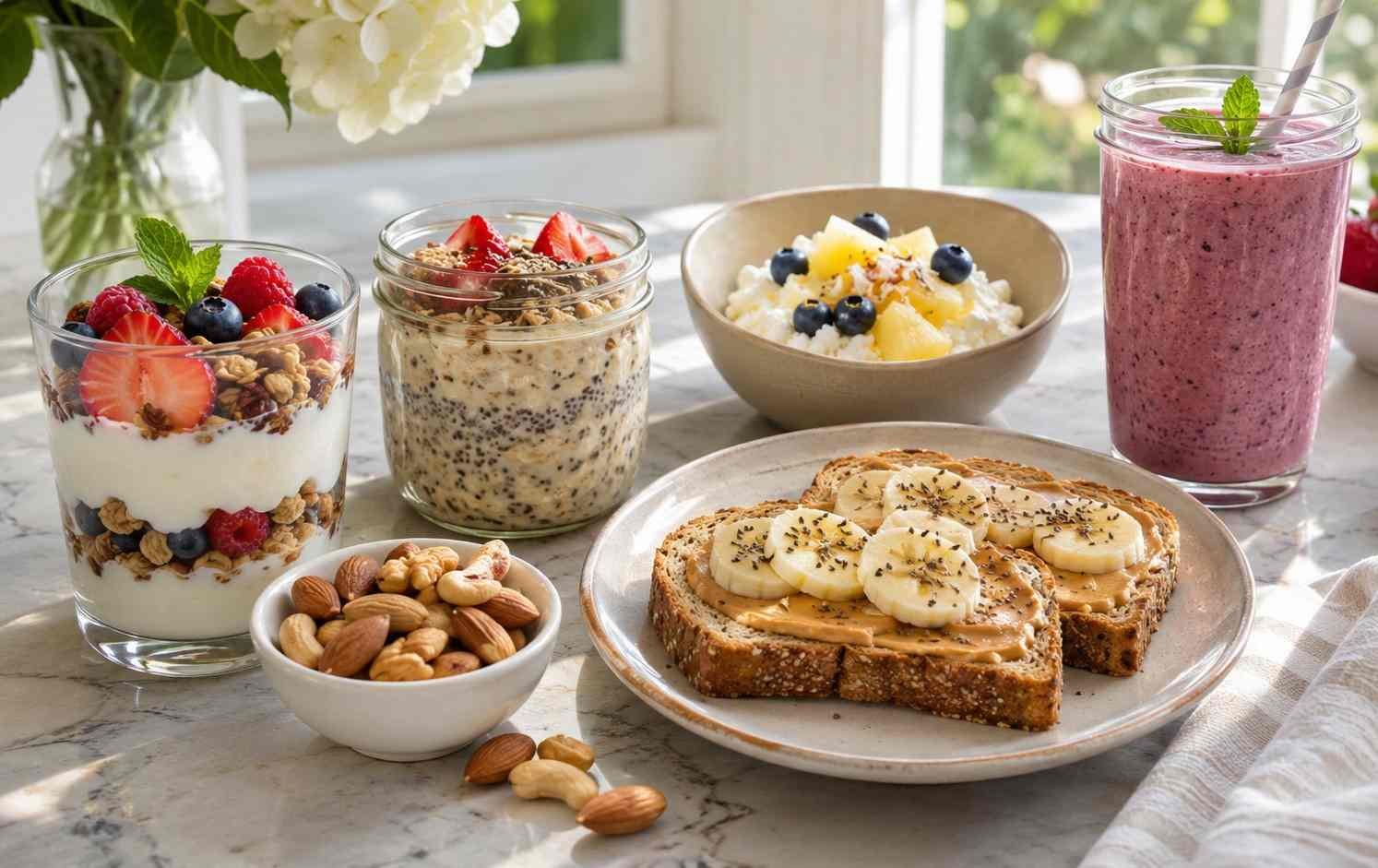
Layer one cup of plain nonfat Greek yogurt with mixed berries, two tablespoons of hemp seeds, and a scoop of vanilla protein powder.
Estimated protein: 45–55 grams. For a lighter breakfast, skip the powder and enjoy approximately 25–30 grams of protein, depending on the yogurt.
Combine one cup of cottage cheese with cherry tomatoes, chopped cucumbers, and ¼ cup of roasted chickpeas. Finish with olive oil, black pepper, and fresh herbs.
Estimated protein: 30–34 grams. This Mediterranean-inspired bowl offers protein, fiber, and refreshing flavors.
Mix one cup of plain skyr with two tablespoons of pumpkin seeds, diced apples, and cinnamon.
Estimated protein: 24–28 grams. This easy breakfast delivers a creamy texture with added crunch.
If traditional sweet breakfasts aren’t your favorite, these warm, savory meals provide satisfying alternatives.
Crumble six ounces of firm tofu or slice four ounces of tempeh. Sauté with spinach, bell peppers, turmeric, garlic powder, and nutritional yeast.
Estimated protein: 20–28 grams. Serve with whole-grain toast for additional protein and fiber.
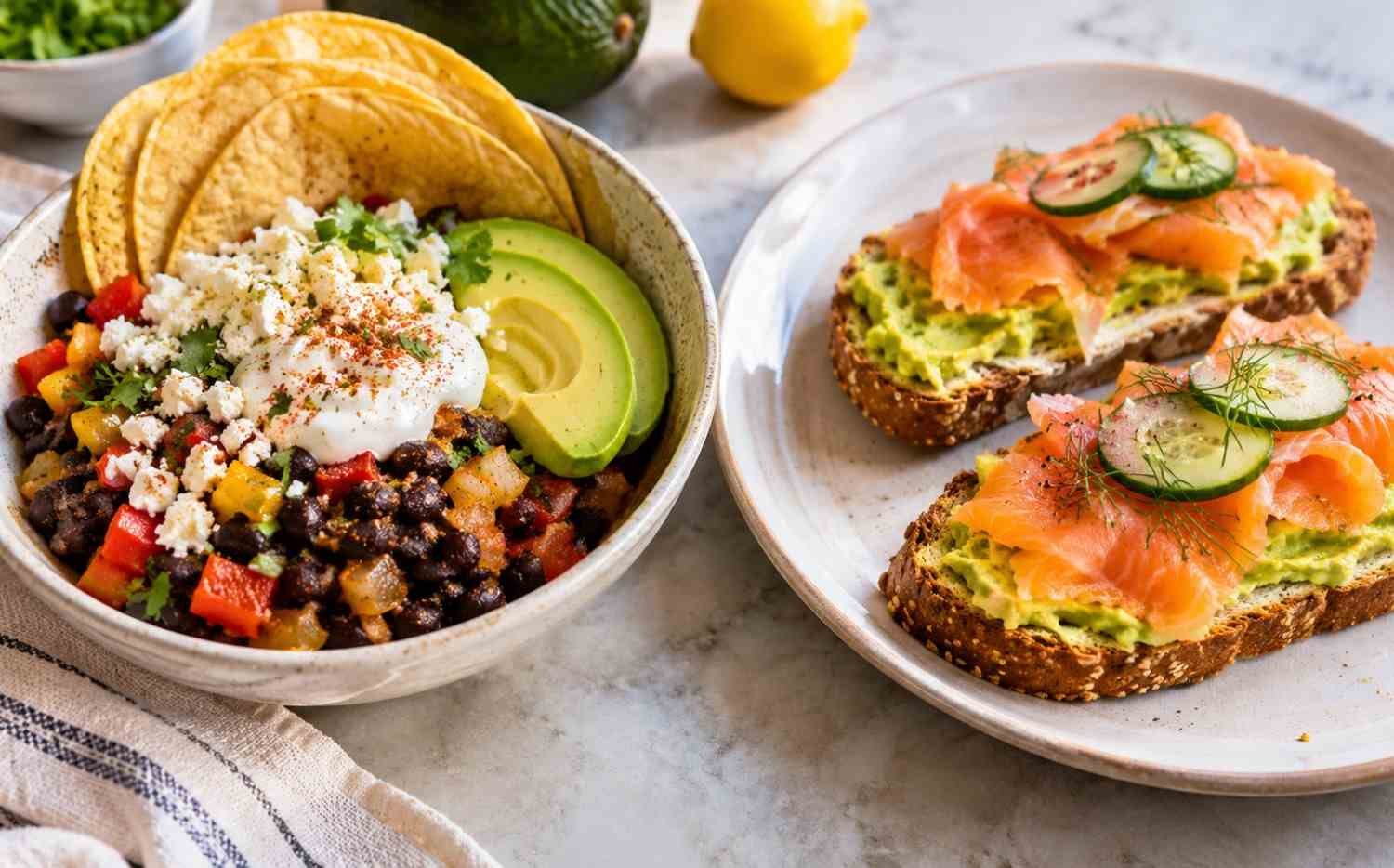
Sauté one cup of cooked black beans with onions, peppers, cumin, and paprika. Add Greek yogurt, Monterey Jack or cotija cheese, avocado, and warm corn tortillas.
Estimated protein: 25–35 grams. This colorful breakfast provides fiber and a substantial amount of plant-based protein.
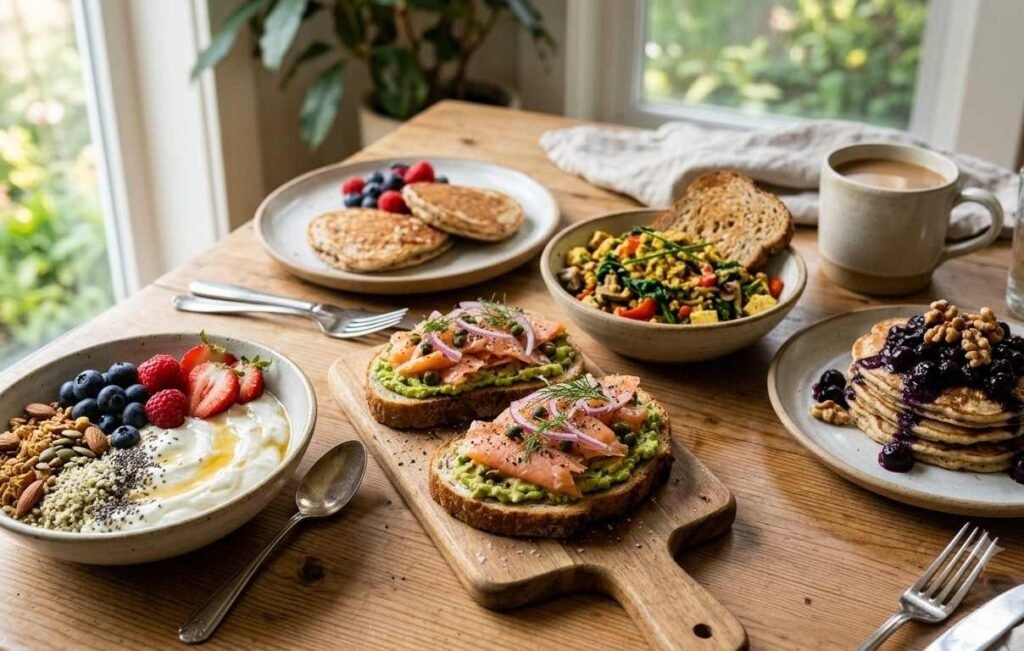
Top two slices of whole-grain toast with three ounces of smoked salmon, mashed avocado, cucumber, and lemon juice.
Estimated protein: 25–30 grams. It makes a flavorful breakfast when you want something savory without cooking.
Fill a whole-wheat tortilla with cooked turkey breakfast sausage, sautéed peppers, spinach, and a small amount of shredded cheddar.
Estimated protein: 20–28 grams. Choose lower-sodium sausage when possible.
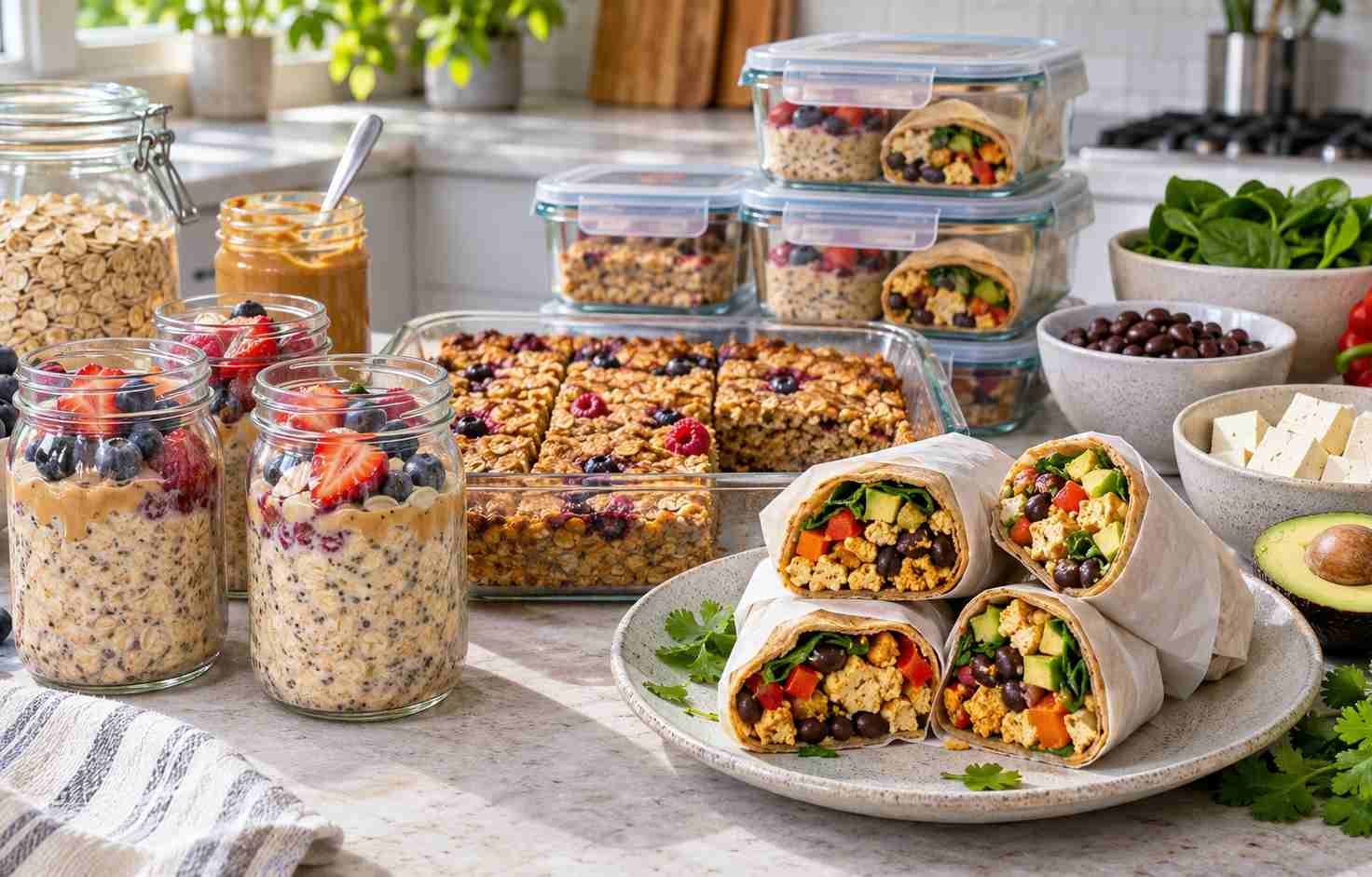
Whole grains become more protein-rich when combined with dairy, seeds, soy foods, or protein powder.
Mix ½ cup of rolled oats, ¾ cup of milk, one scoop of protein powder, and two tablespoons of peanut butter. Refrigerate overnight.
Estimated protein: 35–45 grams. This makes an excellent high-protein breakfast meal prep option.
Blend ⅔ cup of oat flour, one scoop of protein powder, one teaspoon of baking powder, and ⅔ cup of soy milk. Cook small pancakes in a nonstick skillet until cooked through.
Estimated protein: 30–40 grams per batch. Serve with berries and Greek yogurt.
Combine three cups of oats, ¼ cup of protein powder, ¼ cup of hemp seeds, two mashed bananas, and two cups of milk.
Bake at 350°F for approximately 30–35 minutes, until set.
Estimated protein: 11–14 grams per square when divided into six portions. Add Greek yogurt for a higher-protein breakfast.
Cook ½ cup of oats in one cup of soy milk. Stir in two tablespoons of peanut butter, cocoa powder, and three tablespoons of hemp seeds.
Estimated protein: 28–32 grams. It tastes indulgent while providing protein and fiber.
Smoothies work especially well when you’re running late or need a portable breakfast.
Blend one scoop of chocolate protein powder, two tablespoons of peanut butter powder, one cup of soy or ultra-filtered dairy milk, and half a frozen banana.
Estimated protein: 32–43 grams. Use regular peanut butter for a richer texture.
Blend one scoop of vanilla whey isolate, ½ cup of avocado, one tablespoon of chia seeds, and ¾ cup of unsweetened almond milk.
Estimated protein: 25–30 grams. Add spinach for extra vegetables without significantly changing the flavor.
Blend ¾ cup of cottage cheese, one banana, ½ cup of milk, cinnamon, and one tablespoon of almond butter.
Estimated protein: 24–29 grams. The cottage cheese creates a creamy consistency without protein powder.
The easiest approach is to combine multiple protein sources. Greek yogurt with hemp seeds, tofu with high-protein toast, or cottage cheese with whole grains can help you reach approximately 30 grams.
When choosing high-protein breakfast ideas without eggs, consider the serving size and check Nutrition Facts labels. Protein content varies considerably between brands.
I like preparing overnight oats, baked oatmeal, and breakfast wraps ahead of time. These recipes make busy weekday mornings easier.
Store perishable prepared meals at 40°F or below. Generally, use refrigerated cooked leftovers within three to four days, and freeze additional portions when appropriate.
For budget-friendly meals, choose pantry staples such as oats, canned beans, peanut butter, frozen berries, and tofu.
Greek yogurt, cottage cheese, tofu, tempeh, beans, smoked salmon, and protein smoothies all provide substantial amounts of protein. Pairing them with whole grains creates a more balanced breakfast.
Absolutely. Combine Greek yogurt with hemp seeds, cottage cheese with toast, or tofu with black beans. Whole foods can provide plenty of protein without supplements.
Tofu scrambles, tempeh skillets, black bean burritos, soy milk smoothies, and protein overnight oats made with plant-based ingredients are excellent choices.
They can support weight management by helping you feel satisfied. However, sustainable weight loss depends on your overall eating habits, calorie intake, physical activity, and individual needs.
I’ve learned that building a protein-rich breakfast doesn’t require eggs or complicated recipes. With simple ingredients and a little planning, it’s easy to prepare something satisfying every morning.
Start with a few recipes you genuinely enjoy, experiment with different protein sources, and focus on consistency rather than perfection. Combining protein-rich meals with eating 30 grams of fiber a day can also support digestive health and help you feel satisfied longer.
A nourishing breakfast should fit your lifestyle while helping you feel ready for the day.